
When Leadership Gets Messy
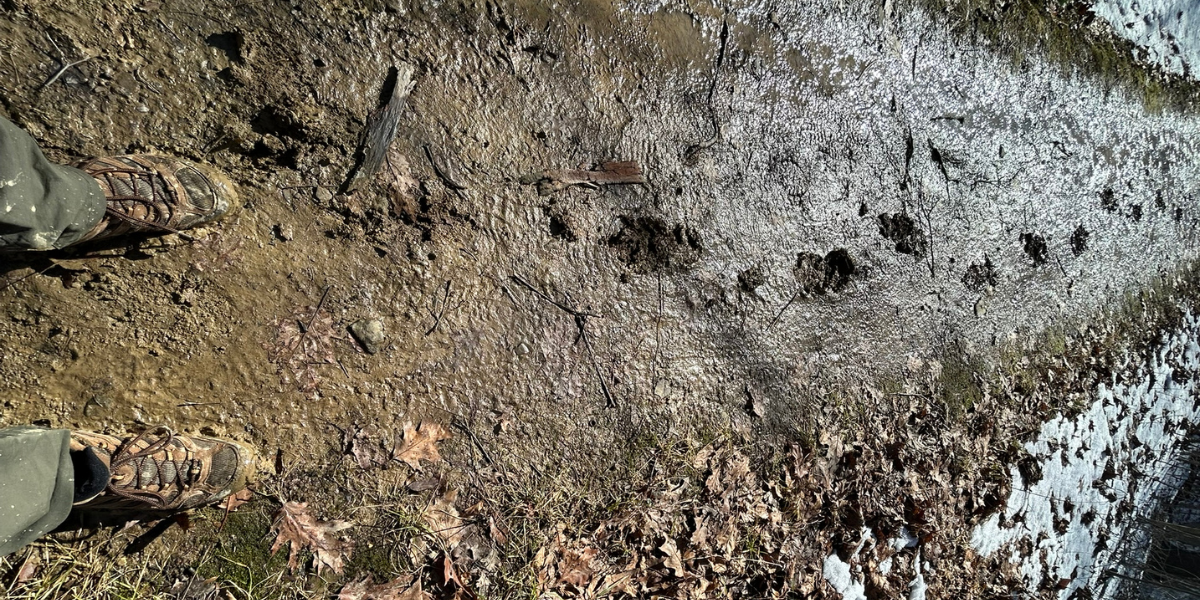
It was the end of February, and the temperatures had finally begun to rise above freezing during the day.
The snow had mostly melted, except for the stubborn gray mounds lingering in store parking lots. Out on the trails in Northeast Ohio, though, the snow and ice had mostly disappeared. I no longer needed four layers to hike. I was down to two.
But the dirt trails had changed.
The lower sections had turned to mud — not puddles of water, but stretches where your boot sinks half an inch into the ground. Sometimes deeper if you are unlucky. Ravines require extra caution during this time of year. The footing can be slick, especially near the edges.
It is the kind of trail condition hikers simply call mud season.
On the day of this particular hike, the temperature was in the high thirties. The sky was bright blue with large white clouds drifting across it. The creeks were running full from the thaw.
It was, in every sense, perfectly messy.
Like most of my hikes, this one was part prayer, part thinking time. Some days I listen to music. Other days I leave the headphones behind. That day was a no-headphones kind of day. I had several things on my mind that needed quiet space: client situations, questions about the direction of the business, and the next blog I would write.
About halfway through the hike, I realized something interesting had happened.
For most of the walk, I had been carefully navigating around the mud. I stepped along the edges of the trail where the ground was firmer and picked my way around the messier sections.
But at some point my mind drifted into deeper thought about leadership.
Without noticing it, I stopped navigating.
Five steps later I realized I was standing in the middle of a thirty-foot stretch of mud. My boots had sunk deeper into the trail than I expected, and every step required a little more effort to pull free.
So I stopped and looked around.
I was already in the middle of it.
And in that moment another thought surfaced.
I actually like messy trails.
Part of me still enjoys stomping through puddles like a kid. But more than that, messy terrain always feels like it holds possibility. It forces you to slow down, pay attention, and choose your footing carefully.
Over the years I have noticed something similar in my work with organizations.
I tend to work with messy ones.
Struggling nonprofits rarely appear messy because the people involved lack dedication or heart. In fact, the opposite is often true. The people care deeply about the mission. The organization has grown. Complexity has increased. Systems that once worked begin to strain under the weight of new demands.

There is something deeply rewarding about watching a struggling nonprofit gain clarity — especially when its supporting systems finally begin providing leaders with the information they need to make wise decisions in a timely way.
Clarity is powerful.
But clarity rarely makes things easier.
More often, it reveals the work that still needs to be done.
When Clarity Reveals Misalignment
Once direction becomes clear, the messy work of realignment begins.
Because once that direction is understood, leaders start to see all the places where the organization no longer aligns with it.
An accounting system may be structured in ways that made sense years ago but no longer serve the organization’s current complexity. Staff behaviors may unintentionally protect departmental “silos” rather than support collaboration. Long-standing programs may continue out of habit even though they no longer advance the mission in the same way they once did.
None of these issues exist in isolation.
In an organization, everything is connected.
Organizations are Systems
The human body offers a helpful analogy. If you break a toe, you can still function — but not as effectively. Something small affects the whole system.
Organizations work the same way.
In my own mental model of leadership, purpose functions like the center post of a tent.
Everything else supports it.
People.
Programs.
Processes.
Promotion.
Each of those elements must not only support the center post, but also work together with one another. When one area drifts out of alignment, tension begins to appear throughout the system.
Leaders often try to solve these problems one piece at a time.
But they rarely exist as isolated problems.
They are usually signals.
Signals that something deeper in the organization needs attention.
The Work of Realignment
Aligning those pieces is rarely quick work.
Sometimes progress feels like navigating a muddy trail. The path forward is still there, but the footing is uncertain. Each step requires attention. The pace slows down.
And sometimes, companions decide the trail is no longer one they wish to walk.
Leadership can feel like standing near the edge of a ravine during mud season — aware that the terrain is shifting and responsible not only for your own footing, but for helping others navigate the trail as well.
The goal is not to eliminate the mud.
The goal is to move through it wisely.
Because while mud season is rarely the most comfortable time to hike, it often prepares the ground for what comes next.
And in organizations — just like on the trail — some of the most important progress happens in seasons that look messy from the outside.
A Quiet Conversation
If this reflection resonates — if you find yourself leading through a season where the work feels messy but necessary — you don’t have to navigate that terrain alone.
I spend much of my work walking alongside nonprofit leaders as they work through seasons of organizational clarity, alignment, and change.
If a quiet conversation would be helpful, I would be honored to listen.

